
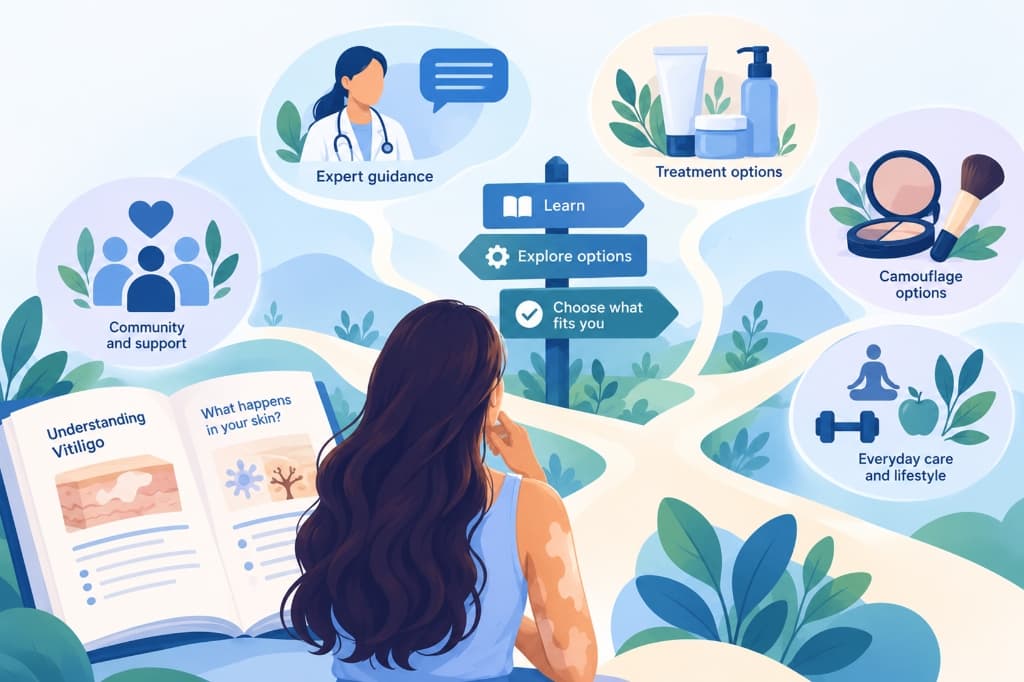
What actually changes in the skin?
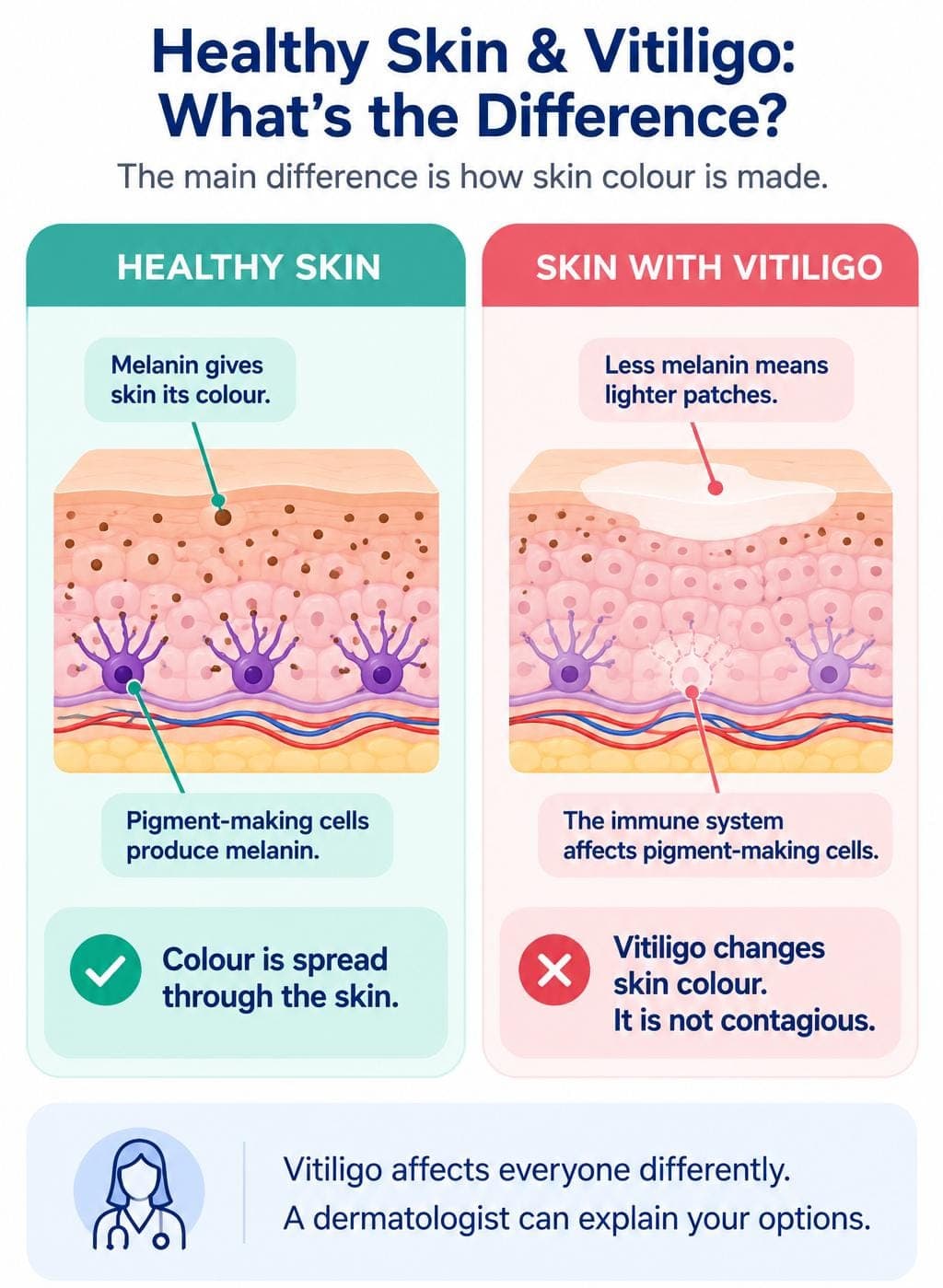
Melanocytes make melanin, the pigment in skin. In vitiligo, immune activity targets these cells and areas lose colour. This is an autoimmune process rather than an infection.
Care can involve two linked tasks: reducing the attack on pigment-making cells and helping colour return. Understanding that difference makes treatment goals easier to follow.
A lighter patch needs a diagnosis, not a guess.
Fungal conditions and changes after inflammation or injury can also cause lighter patches. A dermatologist uses your history and skin examination; a Wood’s lamp may help show pigment loss.
- Bring a timeline, earlier photographs and the names of products used on the area.
- Ask what supports the diagnosis and what remains uncertain.
- Ask whether any tests would change the plan.
- Leave knowing what to do next and when to return.
An online photograph cannot distinguish every cause. Establish what is being treated before comparing remedies.
Type, activity and extent answer different questions.
| Term | What it describes | Why it matters |
|---|---|---|
| Type | Non-segmental commonly affects both sides; segmental usually follows one side or region. | Frames patterns and treatment discussions. |
| Activity | Whether patches are new or enlarging. | Separates controlling change from restoring colour. |
| Extent and location | How much skin and which areas. | A small facial area and widespread patches can call for different approaches. |
These descriptions guide assessment. They do not tell you how someone feels or how much a patch affects their life.
The journey is not a straight line.
A visitor may move from diagnosis to changing patches, a quiet period, repigmentation, maintenance or renewed activity. Years since diagnosis do not automatically determine the next option.
Someone diagnosed long ago may need an activity review today. Someone newly diagnosed may mainly need an explanation and a manageable plan. The five starting points are doors into information, not permanent labels.
Facts that take some weight off.
Vitiligo is not contagious. There is no proven diet that cures it. A family tendency does not mean every child will develop it.
If someone offers a remedy, ask for its ingredients, evidence and possible harm. Avoid removing food groups because of a promise that doing so will restore colour. A confident claim is not the same as a tested treatment.
“Is this a diagnosis or a possibility? What evidence supports this option for my type of vitiligo?” Those are reasonable questions even when advice sounds certain.
Connect the facts to a useful outcome.
You might prioritise fewer new patches, colour in one particular area, a simpler routine, or less disruption to work or school. Write down the priority before comparing treatments.
A good discussion connects the clinical problem, the proposed option, the practical commitment and the review point. If one is missing, you have a specific question to bring back.