
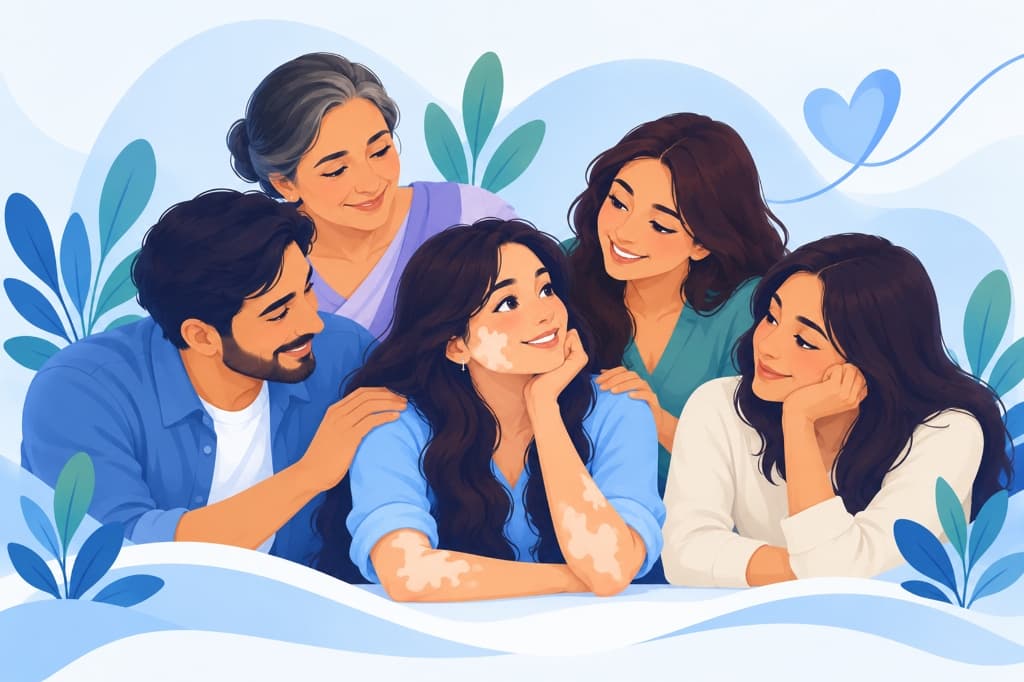
Understand what vitiligo means and does not mean.
Vitiligo is an autoimmune condition where the body’s immune system affects pigment-producing cells (melanocytes). It is not contagious, not caused by diet, and not an infection.
Learning the facts helps you dispel common myths and approach your loved one with confidence and understanding, rather than unhelpful assumptions or unwarranted alarm.
Offer reassurance without defining them by their skin.
A person with vitiligo is much more than their skin. Unsolicited advice, frequent comments on patches, or over-focusing on appearance can inadvertently increase stress.
Support looks like listening when they want to talk, validating their feelings, and respecting whether they choose to explore treatments, use camouflage, or embrace their skin as it is.
Direct them to reliable treatment and care options.
| Goal | Options to explore | How to support |
|---|---|---|
| Seeking medical advice | Consulting a certified dermatologist | Help prepare questions and review symptom history before the appointment. |
| Topical & light therapies | Prescription creams, phototherapy | Encourage consistent routine without making it an obligation. |
| Everyday living & confidence | Camouflage, sunscreen, community support | Follow their lead and provide practical, non-judgmental assistance. |
Encourage them to explore evidence-based therapies with a medical specialist. Early evaluation helps determine whether patches are active or stable, and what treatments are most suitable.
Prepare for conversations and doctor appointments together.
Offer to accompany them to consultations if they want an advocate or a second pair of ears. Take notes on medical advice, discussion points, and follow-up timelines.
Remember that decisions belong to them. Being a supportive loved one means creating a safe space where they feel loved, accepted, and empowered.